That warning light that appeared this morning and disappeared by noon? It is not a fluke. Cold weather puts real stress on the electrical systems of European vehicles, and the symptoms it creates, slow starts, random fault codes, and intermittent dash alerts, are your car’s way of telling you something needs attention. Auto electrical issues in European cars during winter almost always trace back to a handful of root causes that are diagnosable and fixable when handled correctly. At Holland’s Highline Automotive in Bridgewater, MA, we break down exactly what is happening, which vehicles are most affected, and what proper electrical diagnostics actually look like, so you know what to expect before you ever walk through our door.
What Cold Weather Does to Your Electrical System
Most drivers think of battery issues when they think of winter car problems. That’s part of it, but the full picture is more complex, especially in European vehicles.
Here’s what happens inside your car when temperatures drop:
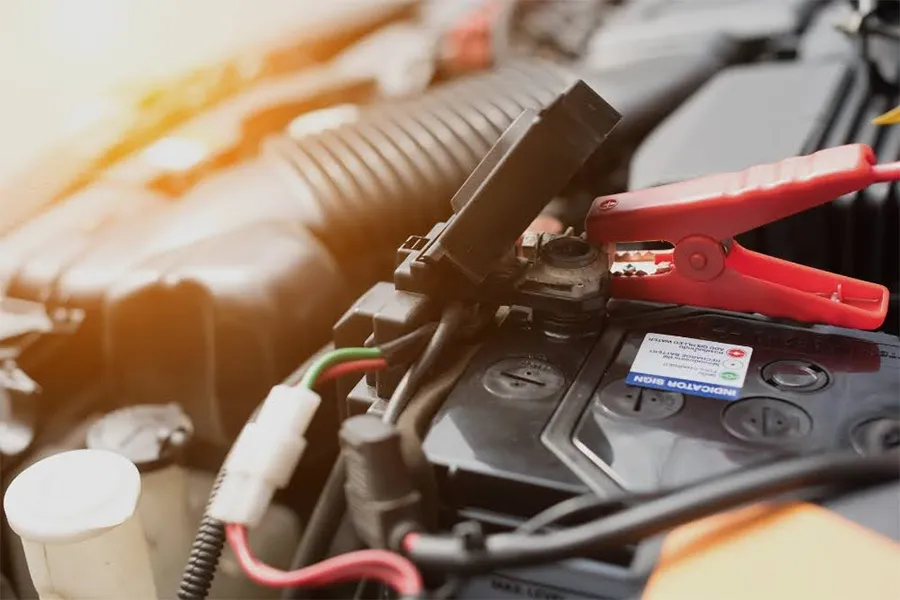
- Battery chemistry slows: Cold reduces a battery’s ability to deliver current, lowering cranking power right when the engine demands the most from it.
- Engine oil thickens: Harder starts pull more load from an already stressed battery.
- Wire insulation stiffens: Rubber and plastic insulation become brittle in freezing temperatures, increasing the risk of cracked or compromised wiring.
- Connector corrosion accelerates: Moisture works its way into connectors during freeze-thaw cycles, introducing resistance where clean contact is critical.
- Module communication slows: European vehicles rely on high-speed CAN bus networks. Voltage instability caused by any of the above can interrupt that communication chain entirely.
The result is a cascade of symptoms that can look random but often trace back to a single source.
The Fault You See Is Not Always the Fault You Have
This is one of the most important things to understand about European electrical diagnostics. A fault code tells you which system logged a complaint. It does not automatically tell you why.
Consider these examples:
- A code pointing to a wheel speed sensor might actually reflect a grounding issue three feet away from that sensor.
- A transmission fault might be a low-voltage condition that has nothing to do with the transmission itself.
- An oxygen sensor code might stem from a failing battery that cannot sustain voltage during a cold start sequence.
Shops that replace parts based on codes alone end up chasing the same problem in circles. Accurate electrical repair starts with proper testing, not assumptions.
Warning Signs Bridgewater, MA Drivers Should Not Ignore During Winter
Dashboard Lights That Come and Go
Intermittent warning lights are one of the most common winter complaints from European car owners in Bridgewater, MA, Raynham, and Brockton. A light appears in the cold morning, then clears by the time you reach work. Easy to dismiss, but this pattern almost always signals a connection or voltage issue that will worsen over time.
Slow or Hesitant Starts on Cold Bridgewater Mornings
If your BMW, Audi, or Mercedes-Benz takes a beat longer to crank than usual, the battery is likely struggling under cold load. European vehicles are sensitive to even marginal drops in cranking power. Catching this early prevents a no-start situation entirely.
Multiple Unrelated Fault Codes at Once
When a scan report shows faults across several unrelated systems simultaneously, that is rarely a coincidence. Multiple modules logging errors at the same time almost always point to a power delivery or ground circuit issue rather than individual component failures.
Electrical Gremlins After a Warm Spell
Freeze-thaw cycles are particularly rough on electrical connections. When temperatures swing from cold to mild and back, connectors expand and contract repeatedly. That movement loosens marginal connections that were holding on just fine in stable weather.
Which European Vehicles Are Most Affected by Cold Weather Electrical Issues
Not all European cars respond to cold the same way. Some platforms are more electrically complex than others, and that complexity raises the stakes when voltage becomes unstable.
- BMW: Battery registration is required after replacement. Skip this step, and the charging system runs incorrectly, causing ongoing electrical symptoms even with a brand-new battery installed.
- Mercedes-Benz: Advanced driver assistance systems and multi-zone electronics draw significant power. Weak batteries generate a wide range of module faults quickly.
- Audi and Volkswagen: EPC and check engine lights frequently appear during cold starts due to sensor communication delays caused by low voltage.
- Land Rover: Air suspension systems are electronically controlled and among the first to log faults when power delivery becomes inconsistent.
- Porsche: Tight integration between chassis and powertrain electronics means a single unstable ground can trigger alerts across multiple systems at once.
Think of It Like a Household Circuit
Here is a simple way to understand what is happening inside your European vehicle during winter.
When voltage drops at a home’s main panel, lights flicker, appliances behave erratically, and breakers trip. Nothing is physically broken, but nothing works correctly either.
Your European car operates the same way:
- Every control module depends on a clean, stable voltage to function.
- When that stability is compromised, the system logs faults and triggers warnings.
- Some systems shut down entirely as a protective measure.
This is why winter electrical issues can feel so unpredictable. The underlying cause is often straightforward. The symptoms it creates are not.
Noticing any of these signs on your European vehicle? Don’t wait for a small fault to become a bigger problem. Contact Holland’s Highline Automotive at 75 1st St, Unit 7, Bridgewater, MA, 02324 or call 774-504-1340 to schedule your electrical diagnostic appointment today.
How European Auto Electrical Repair Is Handled in Bridgewater, MA
At Holland’s Highline Automotive in Bridgewater, MA, every electrical complaint goes through a structured diagnostic process before any repair recommendation is made. The goal is accuracy, not assumptions.
Here is what that process includes:
- Battery load testing: Resting voltage alone does not reveal how a battery performs under the full demand of a cold start. Load testing shows actual output under real conditions.
- Charging system evaluation: Verifying that the alternator is delivering correct voltage across the full operating range.
- Ground circuit resistance testing: Identifying corroded or high-resistance ground paths that silently cause system-wide faults.
- CAN bus communication review: Confirming that control modules are communicating properly across the vehicle’s data network.
- Autologic scan tool diagnostics: The Autologic system provides manufacturer-level access to BMW, Mercedes-Benz, Audi, Volkswagen, Porsche, Land Rover, Jaguar, Rolls-Royce, and Bentley platforms, pulling live data and fault history that generic scan tools cannot access.
Every repair is backed by our WorldPac warranty covering 1 year or 12,000 miles. Loaner cars are available to keep your schedule on track while your vehicle is being serviced.
FAQs About Auto Electrical Repair and European Vehicles in Bridgewater, MA
Why do electronics fail more in winter?
Cold temperatures reduce battery output and cause components to contract, which disrupts electrical connections and stresses control modules. The combination creates ideal conditions for faults that would not appear in warmer weather.
Can cold weather cause warning lights?
Yes. Low voltage and loose connections caused by cold temperatures frequently trigger warning lights that clear once the vehicle warms up. These should not be ignored even if they disappear on their own.
Are European cars sensitive to voltage drops?
European vehicles are more sensitive to voltage drops than most domestic platforms because their control modules require stable, consistent power to communicate correctly. Even small drops can generate multiple simultaneous fault codes.
What causes random dash alerts?
Random dashboard alerts are typically caused by intermittent wiring faults, corroded ground connections, or a battery that can no longer maintain a stable output under load. Accurate diagnostics identify the source rather than treating each alert separately.
Schedule Your Auto Electrical Repair in Bridgewater, MA at Holland’s Highline Automotive
Don’t let an intermittent fault turn into a roadside breakdown. Cold weather puts consistent pressure on electrical systems that are already showing signs of wear, and the longer these issues go unaddressed, the more complicated they become to resolve.
At Holland’s Highline Automotive, the approach is straightforward: test accurately, explain clearly, and fix it properly the first time. That commitment is backed by a WorldPac warranty of 1 year or 12,000 miles on every repair.
Visit us at 75 1st St, Unit 7, Bridgewater, MA, 02324, or call 774-504-1340 to book your appointment. Holland’s Highline Automotive proudly serves drivers in Bridgewater, Raynham, Brockton, Easton, Taunton, and communities throughout southeastern Massachusetts.